WHY WILD HORSE RESERVOIR
Aurora Water is a national leader in water conservation and reuse; however, these initiatives alone cannot sustain our emergency water reserves in the long term. Without more water storage, Aurora Water would begin dipping into our emergency water reserves by the year 2045.
The proposed Wild Horse Reservoir Project would provide the critical water storage that Aurora Water requires to ensure reliable water supply for community needs and maintain emergency water reserves during severe and prolonged drought or system emergencies.
Droughts, wildfires, an evolving climate, and potential system outages present serious risks to Aurora’s water supply. In the semi-arid west, water reservoirs serve as vital water savings accounts to ensure sustainable and drought-resistant municipal water supplies. The proposed Wild Horse Reservoir Project would act as a water savings account by storing extra water in wetter years so that we have enough water in drier years. As drier years become more common, water storage becomes more critical to a sustainable water supply.
In addition, because Aurora is using less water today than in 2000, we need somewhere to store the water that we are saving. The Wild Horse Reservoir project would allow Aurora Water to better manage its existing water rights by helping store some of the water saved from our nation-leading conservation and reuse efforts.
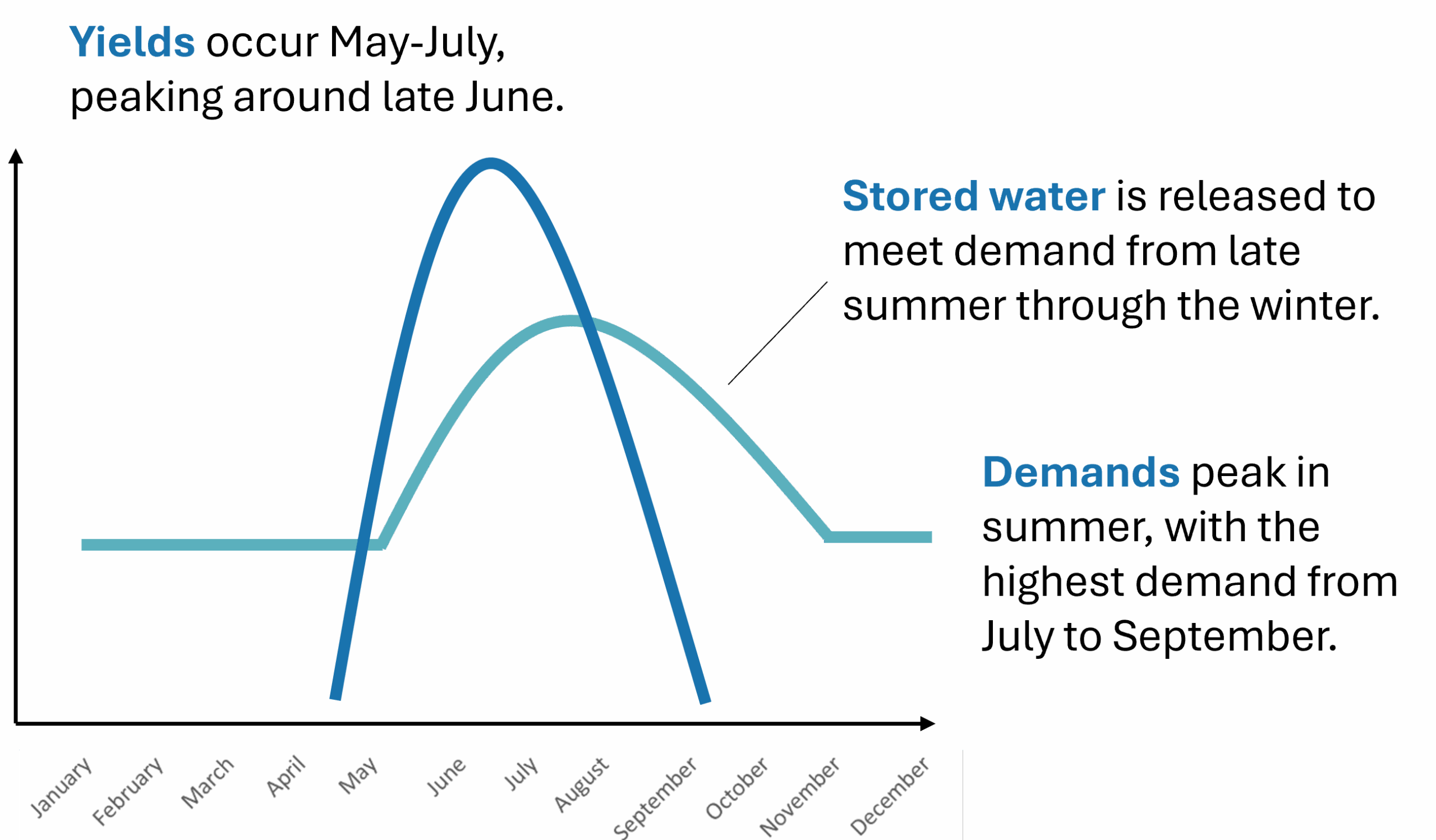 Reservoirs also help water utilities better manage the difference between when the water can be collected and when it is needed. Water yields—that is, when the mountain snow melts and enters the rivers—typically occur between May and July. However, most of the community needs are from May to October. Having adequate water storage is critical for ensuring a reliable water supply when the water is most needed.
About half of Aurora’s water supply comes from the Colorado and Arkansas River basins and must be pumped from the mountains to the South Platte River basin via the Otero pipeline. Once the water is in the South Platte River basin, Aurora’s water supply can flow down the South Platte River to the city of Aurora. The proposed location for the Wild Horse Reservoir Project in the South Platte River basin ensures that Aurora Water could access emergency water storage in the event of an Otero system outage.
The Colorado Water Plan projected a statewide water supply gap by 2050 and prioritizes attaining additional water storage. The proposed Wild Horse Reservoir Project is among the projects under consideration to address this gap as a key component of Aurora’s 2022 Integrated Water Master Plan Update.
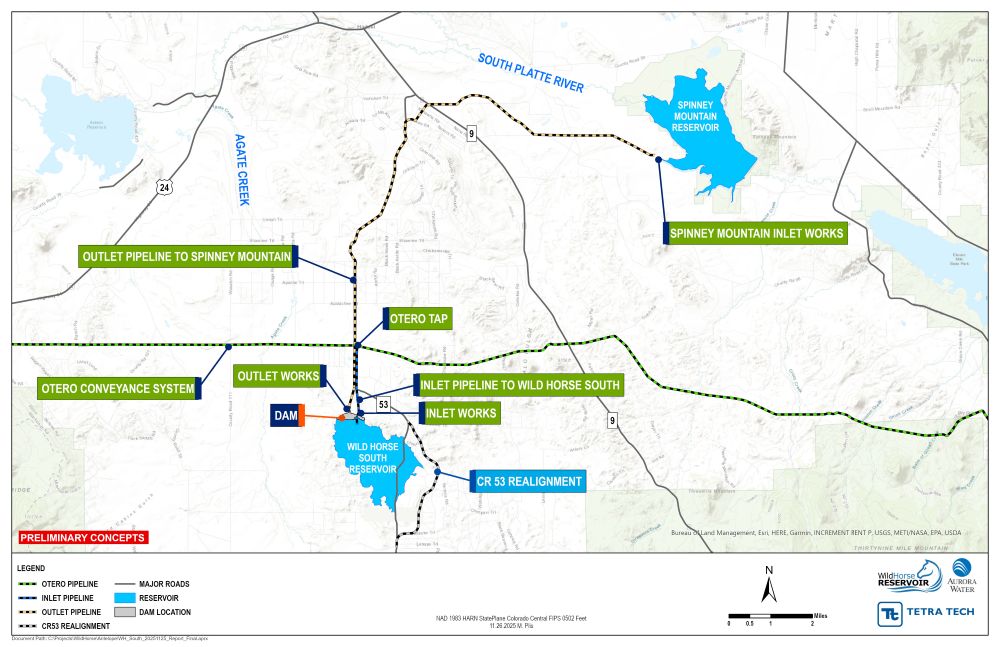
Map showing the proposed location for Wild Horse South Reservoir in the South Platte River basin and in relation to the existing Otero pipeline. Click to view a larger image.